
Setting Up an Amateur Weather Station: Sensors, Siting and Data Logging
Running a personal weather station in Poland is considerably more rewarding than checking a national forecast app — and considerably more demanding. The country's mesoscale variability means that a well-sited backyard station in Kraków can produce temperature and precipitation readings that diverge meaningfully from the nearest official IMGW-PIB station 12 km away. The effort of setting it up correctly pays off in genuinely local data.
The siting problem
Before choosing any sensor, the most important decision is where to put it. WMO (World Meteorological Organization) guidelines specify a temperature screen should be installed over short grass, at least 1.25 m above the ground, shielded from direct sunlight and precipitation, and at least 4 times the height of any nearby obstacle away from walls, hedges or trees. In a typical Polish suburban garden, these requirements immediately eliminate most candidate positions. A wall-mounted sensor near the house will consistently read 1–3°C warmer than a properly sited one during clear summer afternoons. That error will be systematic — it will appear in every comparison you make and distort multi-year trends.
If a textbook open-field site is impossible, the next best approach is a rooftop mast at least 2 m above the roof ridge, away from chimneys and HVAC exhausts. This is how many Polish amateur stations in built-up areas achieve WMO-class data quality. The Polish Amateur Meteorological Society (PTMA) publishes siting guidance translated from WMO No. 8 that is worth reading before purchasing any hardware.
Temperature and humidity: the Stevenson screen
The Stevenson screen — a double-louvred white wooden or plastic box — has been the standard temperature shelter since the 1860s. Its louvred walls allow free airflow while blocking radiation and rain. Modern variants use aspirated radiation shields (a fan-ventilated tube design) which perform better in low-wind conditions, particularly during clear winter nights in Poland when still air makes passive screens susceptible to radiative errors. For a stationary station intended to contribute to a long-term local record, a well-made wooden Stevenson screen positioned correctly will outperform a cheap aspirated unit positioned poorly.
Inside the screen, a PT100 or PT1000 platinum resistance thermometer provides the most stable measurements. Consumer stations often use cheaper NTC thermistors, which are adequate for daily weather tracking but may drift over years and are harder to calibrate. If participating in a citizen science network like the Meteonetwork Poland grid, check the network's recommended sensor specifications before purchasing.
Precipitation measurement
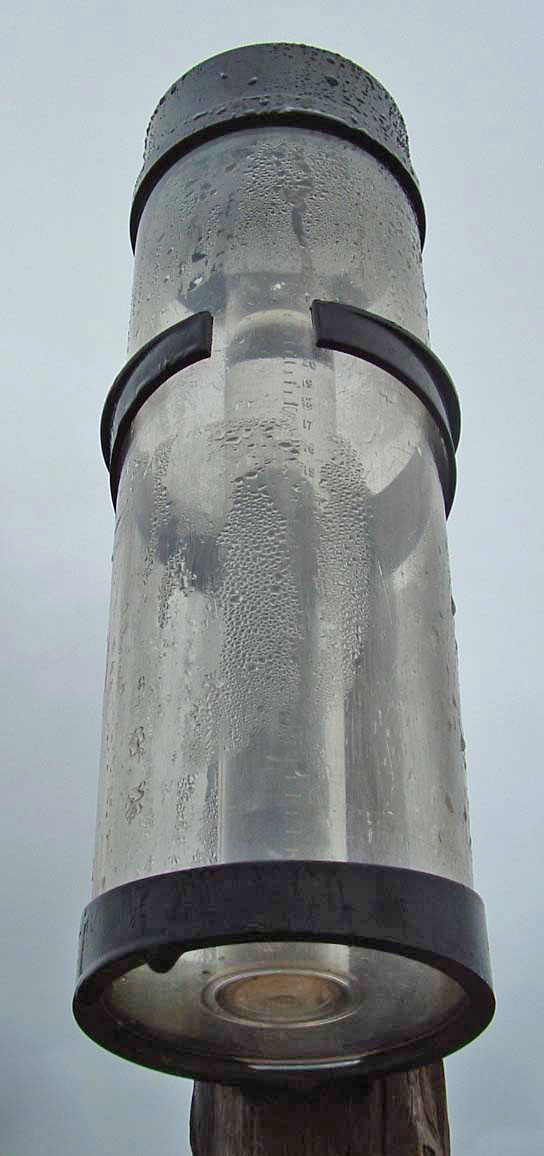
Rain gauges come in two main categories for amateur use: manual graduated cylinders read once daily, and tipping-bucket gauges that count rainfall in increments of 0.1–0.2 mm and log automatically. The tipping-bucket has a known weakness in snow and freezing rain: the bucket can freeze solid. In Polish winters — particularly in Podlaskie and Mazury, where temperatures regularly drop below −10°C overnight — a heated tipping-bucket is close to mandatory for continuous data. Non-heated gauges will under-record winter precipitation, sometimes substantially.
Placement matters here too. The standard is a 200 mm diameter gauge with the rim 1 m above the ground, in an open area where wind exposure is similar from all directions. A gauge placed in the shelter of a building will catch less than a properly exposed one and will under-read precipitation during events with strong winds — precisely the conditions that produce the highest totals.
Wind sensors: where amateur stations most often fail
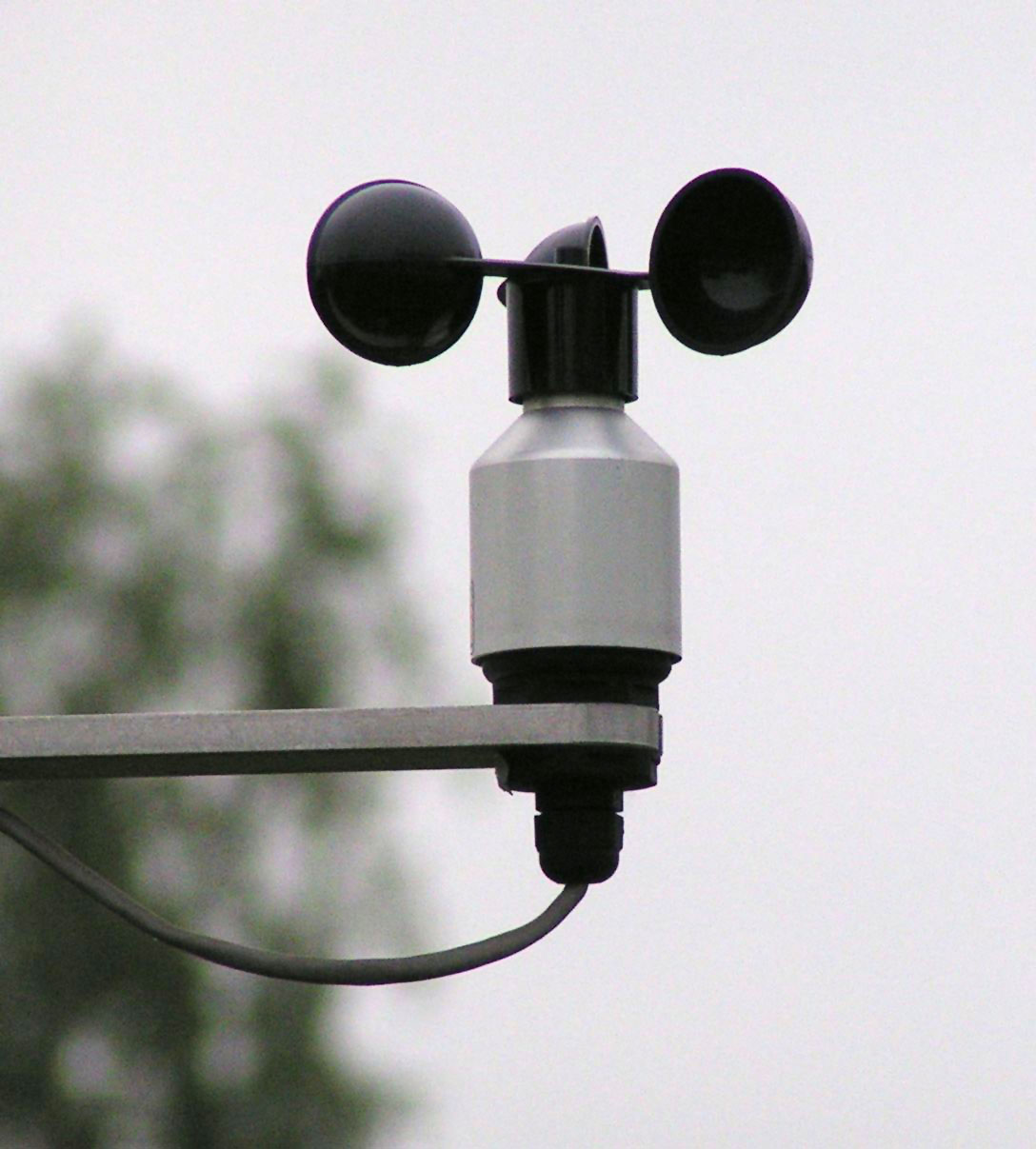
WMO specifies a 10 m mast over flat, open terrain as the standard wind measurement height. Very few private gardens in Poland can accommodate this. The practical compromise is to install a cup anemometer and wind vane as high as safely possible — typically 3–5 m on a roof mast — and to document the installation clearly so that any comparisons with official data account for the difference in height and exposure. Ultrasonic anemometers, which have no moving parts, perform better than cup models during icing conditions and can be worth the additional cost for year-round stations in mountain foothills.
Data logging and sharing
The practical value of a backyard station multiplies when data is logged and reviewed over time. Most current consumer stations (Davis Vantage Pro, Froggit WH series, Ecowitt) include a console with internal memory and internet connectivity. Data can be uploaded to Weather Underground, CWOP (Citizen Weather Observer Program) or the IMGW-PIB's citizen-network partner systems. Weather Underground's map is a useful check on neighbouring stations — systematic outliers in either direction are often siting problems visible in the data.
For observers who want full control over their data pipeline, a Raspberry Pi connected to a Davis serial port or a set of individual I2C sensors (BME280, SHT40) running open-source software such as WeeWX offers a flexible, well-documented alternative. WeeWX natively exports to Weather Underground and has a Polish-language user community.
Minimum viable station for Poland
- Temperature/humidity in an aspirated radiation shield or Stevenson screen
- Tipping-bucket rain gauge (heated for stations north of Warsaw latitude)
- Barometric pressure sensor (indoor placement acceptable; pressure is not terrain-sensitive in the same way)
- Cup anemometer and wind vane at the highest achievable point
- Data logger with at least 7-day local storage and network uplink
Adding a pyranometer for solar radiation or a leaf/soil moisture sensor moves the station into more specialised territory, but for most observers the above five-element set covers the measurements most useful for understanding and verifying daily forecasts.